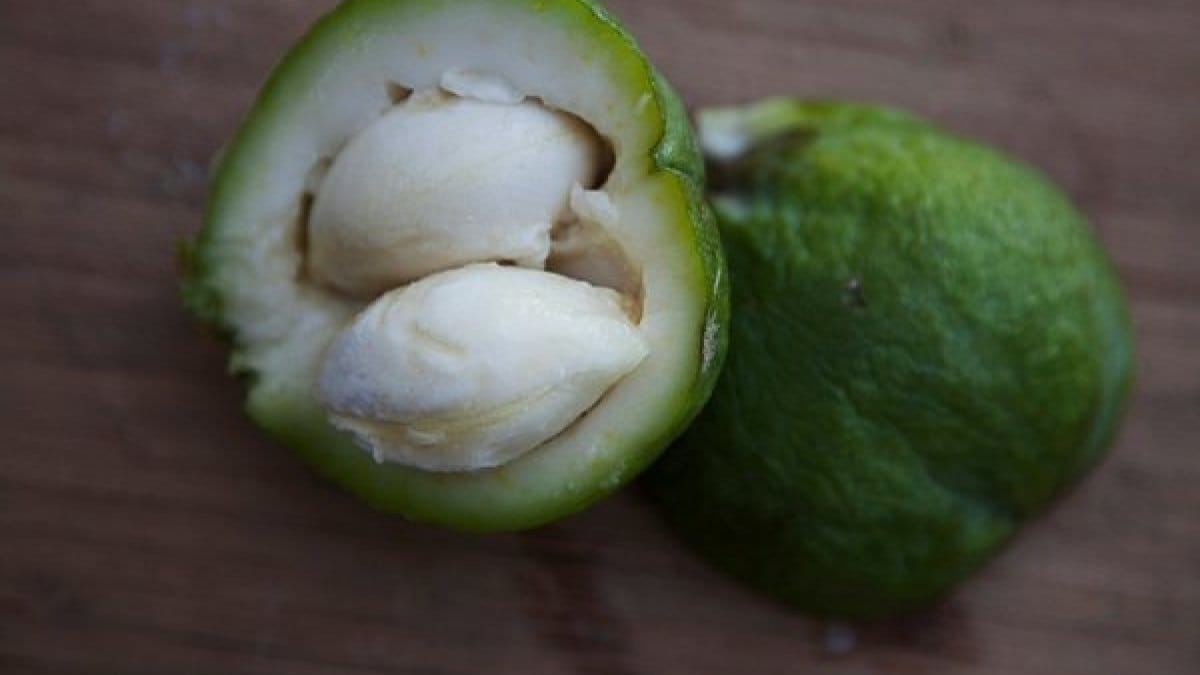
Local, organically grown white sapotes have been in store the last couple of weeks and we gets lots of questions about what they are and how to eat them.
Sapotes are native to Mexico and the trees produce a fruit that the Permablitz Melbourne website describes as having a texture that is smooth and a little like custard and a flavour a bit like a peach, a bit like a banana, with a hint of vanilla. The fruit is ready when it has a little bit of give, like a ripe avocado. To eat, cut the fruit open and scoop out with a spoon, discarding the skin and seeds. Apparently sapotes can cause drowsiness, so don’t eat too many first thing in the morning.
They grow really well in Margaret River and are picked while still quite firm, so leave them out at room temperature for about a week before enjoying.
With an abundance of Tuscan (aka Cavalo Nero) kale instore, as well as Jerusalem artichoke, this recipe is worth giving a try!
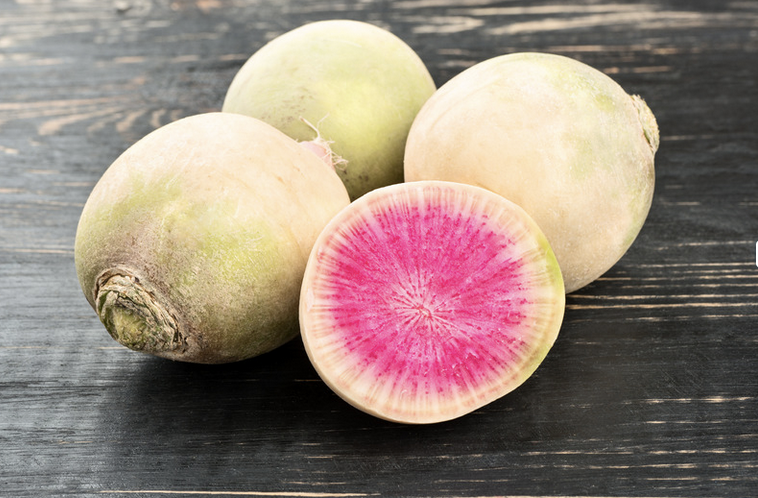
Watermelon radish from Sally and Patrick’s Wagtails Garden on the farm. White on the outside and pink in the middle, they taste just like normal radish but are way prettier.